When a drain backs up, the first question I ask on the phone is always the same: is it one drain, or more than one? The answer sorts the call into two very different jobs. One slow drain is almost always a clog in that fixture or the short line right behind it. Several drains acting up together, especially the low ones, means the problem is further down, in the main line that carries everything out of the house. The fix for one does nothing for the other.
Getting this right before anybody touches a tool saves a lot of grief. Somebody can spend a whole afternoon plunging a bathroom sink while the real problem is a root mass out in the yard. It goes the other way too, when a homeowner gets quoted a full line job for what turns out to be a clogged kitchen trap.
One slow drain
If one sink drains slow and every other drain in the house is fine, the clog is local. In a bathroom sink it is almost always hair and soap scum caught in the trap or around the pop-up stopper. In a shower or tub it is hair at the drain or in the trap under the floor. In a kitchen sink it is usually grease that went down warm and hardened on the pipe wall, with food caught in it.
These clogs live in the first few feet of pipe. They are often fixed by pulling the stopper and cleaning it, taking the trap apart under the sink, or running a small hand cable into the line. None of that involves the main line, and none of it should be priced like a main line job.
For a single slow drain, a few things are worth trying before you call. Pull the stopper on a bathroom sink and clean off what is wrapped around it. Use a plunger with a good seal, and on a double kitchen sink, hold a wet rag over the other drain so the pressure goes where you want it. Hot tap water can help loosen grease in a kitchen line, but skip boiling water on plastic pipe. If none of that moves it, stop there and call, because pushing harder with the wrong tool is how a trap gets cracked.
Becca McDonald ran into exactly that: “We had a simple clogged kitchen sink issue and an outrageous quote from a large company. Paul came in and found a quicker solution to the problem.” A clogged kitchen sink is a kitchen sink problem. It should be treated that way.
When it is the main line
- The lowest drain backs up first. A tub, shower or floor drain on the lowest level fills with dirty water when something else in the house drains.
- The washer causes trouble somewhere else. The washing machine dumps a lot of water fast, and if the main is partly closed, that water comes up in a tub or a toilet.
- A toilet gurgles when a sink drains. Air is getting pushed back through the system because the water cannot get out.
- Everything is slow at once. Every drain in the house, getting a little worse each day.
- Flushing a toilet makes water rise in the tub. That one is about as clear as it gets.
Water finds the lowest opening. If the main line is blocked, everything the house sends backs up until it finds the lowest drain it can come out of, which is usually a tub or a shower. That is why a backup in the tub when the toilet is flushed is so telling. It has nothing to do with the tub.
If you think the main is blocked, stop using water in the whole house. Do not run the washer or the dishwasher, do not take a shower, and do not keep flushing. Every gallon you send down has to go somewhere, and the somewhere is your floor.
What not to do
Do not pour chemical drain cleaner into a backed-up main. It will not reach the blockage, it will sit in the tub or the toilet, and now the water coming back up is caustic. That makes the cleanup more dangerous and the job harder for whoever has to work in it. It is also hard on old cast iron, which a lot of the houses in Mobile County still have.
Do not keep plunging a toilet when the main is the problem. You are just pushing water back and forth in a line that has nowhere for it to go, and sometimes you push it up into the tub. And do not open the outside cleanout cap without thinking first. If the main is blocked downstream of the cleanout, the line can be full right up to the cap, and when you loosen it, the water comes out under pressure. If you do check it, loosen it slowly, stand to the side, and be ready to back away.
The cleanout tells you where the clog is
The outside cleanout is the capped pipe near the foundation or out in the yard. It gives direct access to the main line, and it tells you a lot without any tools. If you carefully loosen the cap and the pipe is full of water, the blockage is downstream, between the cleanout and the street or the septic tank. If the cleanout is dry and the house is still backing up, the blockage is between the house and the cleanout, often under the slab or right at the foundation.
That distinction matters for where I start. With a full cleanout, I go in at the cleanout and work toward the street. With a dry cleanout, I may need to go in from inside the house, through a toilet flange or a roof vent. Telling me what the cleanout looks like on the phone helps me bring the right equipment for the first trip.
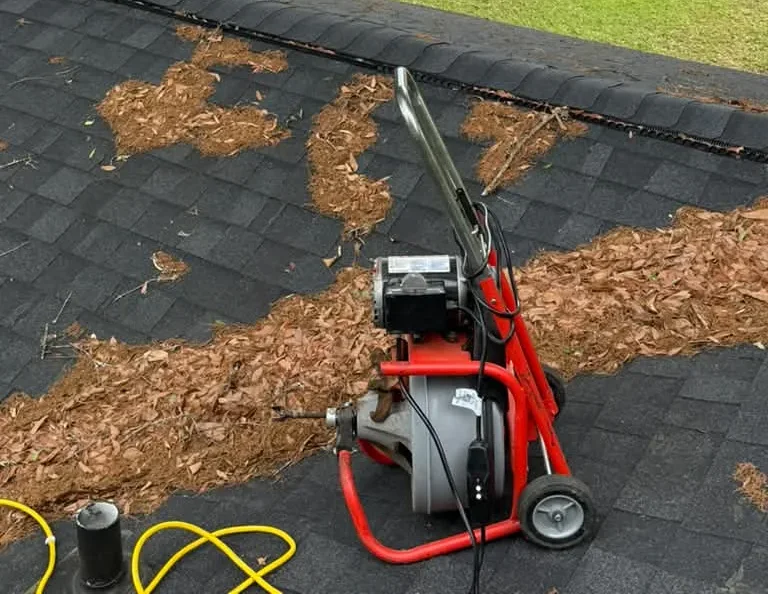
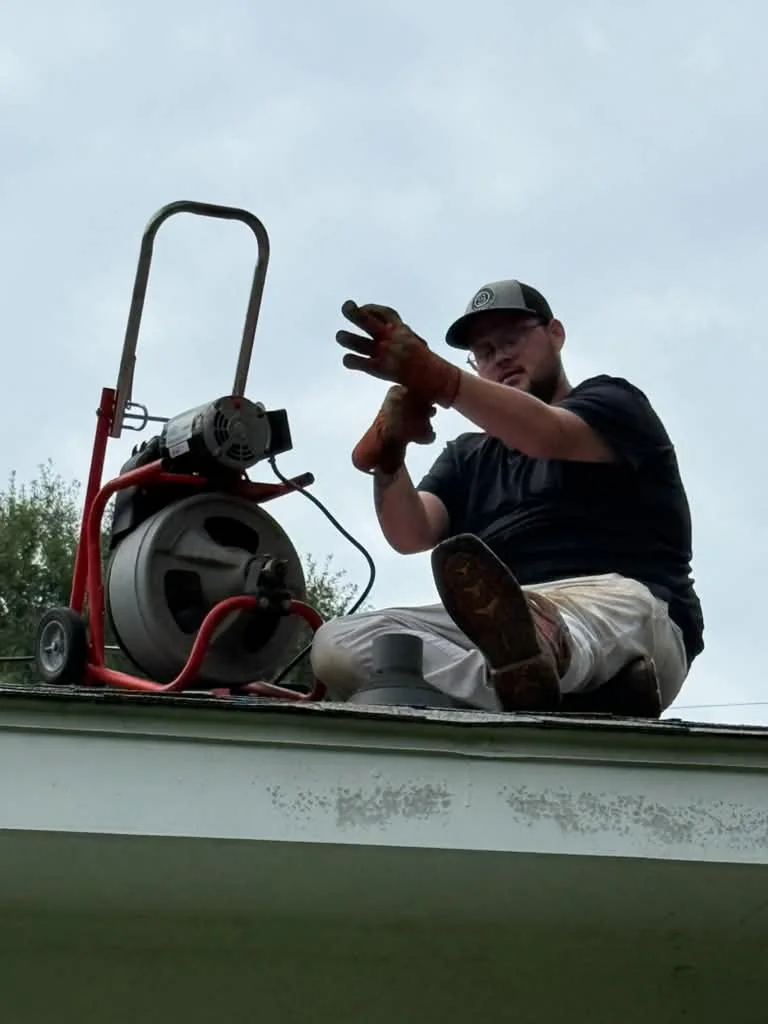
Sometimes the best way into a line is from above. When a house has no usable cleanout, the vent stack on the roof goes straight down into the drain system, and a drum machine can run a cable down through it. It is not my favorite way in, but it works and it keeps the mess out of the house.
Cable or camera
To clear a main line, I use a drum machine: a motor-driven drum holding a long steel cable with a cutting head on the end. The cable spins as it feeds into the line, and the head cuts through whatever is blocking it, whether that is roots, a wad of wipes or a buildup of grease and paper. When the head breaks through, the water drops and you hear the line start to drain. Then I run water to flush it and work the cable back and forth to open the line up as fully as I can.
Clearing restores flow. It does not tell you why the line blocked. If it is the first backup in years and the cable brought back wipes or paper, that may have been the whole story. If the cable brought back roots, or the line has backed up before, or the head kept snagging on something, that is the time to put a camera in. The camera shows whether there is a break, a sag or a root-invaded joint that will keep catching things. The drain camera inspection page covers what that shows.
If a line keeps closing every few months, clearing it again without looking is selling you the same job twice.
What the cable brings back
The cutting head often carries a piece of what it cut through when it comes back out of the line, and that tells me a lot. Fine hair-like roots wrapped around the head mean roots in a joint. White greasy buildup means grease from the kitchen line. Wipes or paper towels wrapped around it mean something got flushed that should not have. Rust flakes mean old cast iron that is scaling. I show you what came out, because it is your line and you should know what is in it.
After the water goes down
Once the line is clear, the tub or floor where the water came up needs real cleaning, because what came up was sewage. Hot soapy water followed by a disinfectant on hard surfaces, and anything soft that soaked it up, like a bath mat or a rug, is usually better thrown out than washed. Run the water in each fixture for a minute after I leave to make sure everything drains at its normal speed. If any drain is still slower than it should be, or the gurgling comes back within a few days, call me back, because that tells me something is still catching in the line.
Branch lines in between
There is a middle case too. Sometimes one side of the house is slow, like every drain in one bathroom, or the kitchen sink plus the dishwasher, while the rest of the house is fine. That is a branch line, the pipe that collects drains from one area and carries them to the main. Branch clogs are cleared a lot like main clogs, just from a different spot, and they are usually smaller jobs.
Septic and grinder systems
Out in Washington County, where a lot of houses are on septic, a backup that looks like a main line clog can sometimes be a full tank or a problem in the line to the tank. And on houses with a grinder pump, which is common in parts of Baldwin County, a backup can come from the pump not running. On the phone, tell me which kind of system you have. If you are not sure, tell me whether you pay a sewer bill and whether there is a control box with an alarm light in the yard.
Keeping it from happening again
Most main line backups come from a few things. Wipes, even the ones labeled flushable, hold together and catch on joints and roots. Grease goes down warm and hardens in the line. Roots find any gap. Old pipe catches what it used to pass. You can do something about the first two by keeping wipes and grease out of the drains. The other two take finding and fixing the spot in the line, which is what the camera is for. If the camera shows a break or a root-invaded joint, a repair at that spot ends the cycle, and that is the point where a drain call turns into a sewer line repair.
When it is an emergency
Sewage coming up into a tub or onto a floor is not a wait-until-next-week problem. It is unsanitary, it soaks into anything it touches, and it gets worse every time somebody forgets and runs water. If that is what you have, treat it as an emergency plumbing call, stop all water use, and keep kids and pets away from it. For a single slow drain, that is a regular drain cleaning visit, and it can usually be scheduled at a time that suits you.
What to tell me when you call
Tell me which drain backed up first, and whether more than one is slow. Tell me whether water came up anywhere when the washer drained or a toilet flushed. Tell me whether you know where the cleanout is and whether it looks full, and whether you are on a sewer, a septic tank or a grinder pump. That lets me bring the right machine. Some of my drain work is on the gallery page, and my number is on the contact page.
Questions people ask about this
Why does my tub fill up when I run the washing machine?
The washer dumps a lot of water quickly, and if the main line is partly blocked, that water backs up to the lowest drain in the house, which is often the tub. It points at the main line, and the tub is just where the water shows up.
Can I clear a main line clog myself?
A rented machine can clear a simple clog, but a drum machine is a powerful tool that can injure you or damage old pipe if it is used wrong. If you have roots or old cast iron, it is a job for someone who runs one every week.
Is it safe to open my outside cleanout?
Loosen it slowly and stand to the side. If the main is blocked further down, the pipe can be full and the water can push out under pressure. If you see water at the threads, stop and call.
Will a camera inspection be needed every time?
No. If it is the first backup in a long time and the cable brought back wipes or paper, clearing it may be enough. If it brought back roots, or this has happened before, a camera is the next step.
Why does my kitchen sink keep clogging?
Kitchen lines clog with grease that cooled and hardened on the pipe, with food caught in it. Keeping grease out of the sink helps a lot. If it keeps happening, the line may have a sag or buildup that a camera would show.
Drains backing up?
Call and tell me which drain backed up first, whether more than one is slow, and whether water came up anywhere when the washer or a toilet ran.