
Systems · Wilmer, AL
Repiping
A whole-home repipe done once, done right, and explained so you know what was done and why. That is the whole pitch, and it is why Wilmer homeowners keep the same number.
Master Plumber MP4379BBB A+ accreditedPaul Evans answers
How Paul handles it
There is no script. Paul works the problem the way the house presents it, because a 1970s slab in Wilmer and a new build on the north side do not fail the same way and should not be quoted the same way.
Nothing gets sold that the house does not need. Running a one-truck shop means there is no quota pushing a replacement when a repair would hold, which is the single biggest difference between this and a franchise van.
Being a one-man operation is the whole point. Every job has Paul’s name and license on it, so there is no room for shortcuts and nobody to blame if it fails. The longer version of how this shop runs is on the about page, and the work itself is in the gallery.
What matters on a repiping job
Why a whole-house repipe instead of another patch
When a system starts leaking at one joint, the rest of the joints are the same age, the same material and under the same water. Polybutylene and early galvanized both fail this way: not once, but repeatedly, in a pattern. At a certain point you are paying for the same repair over and over and the cheaper answer is to stop patching.
PEX or copper
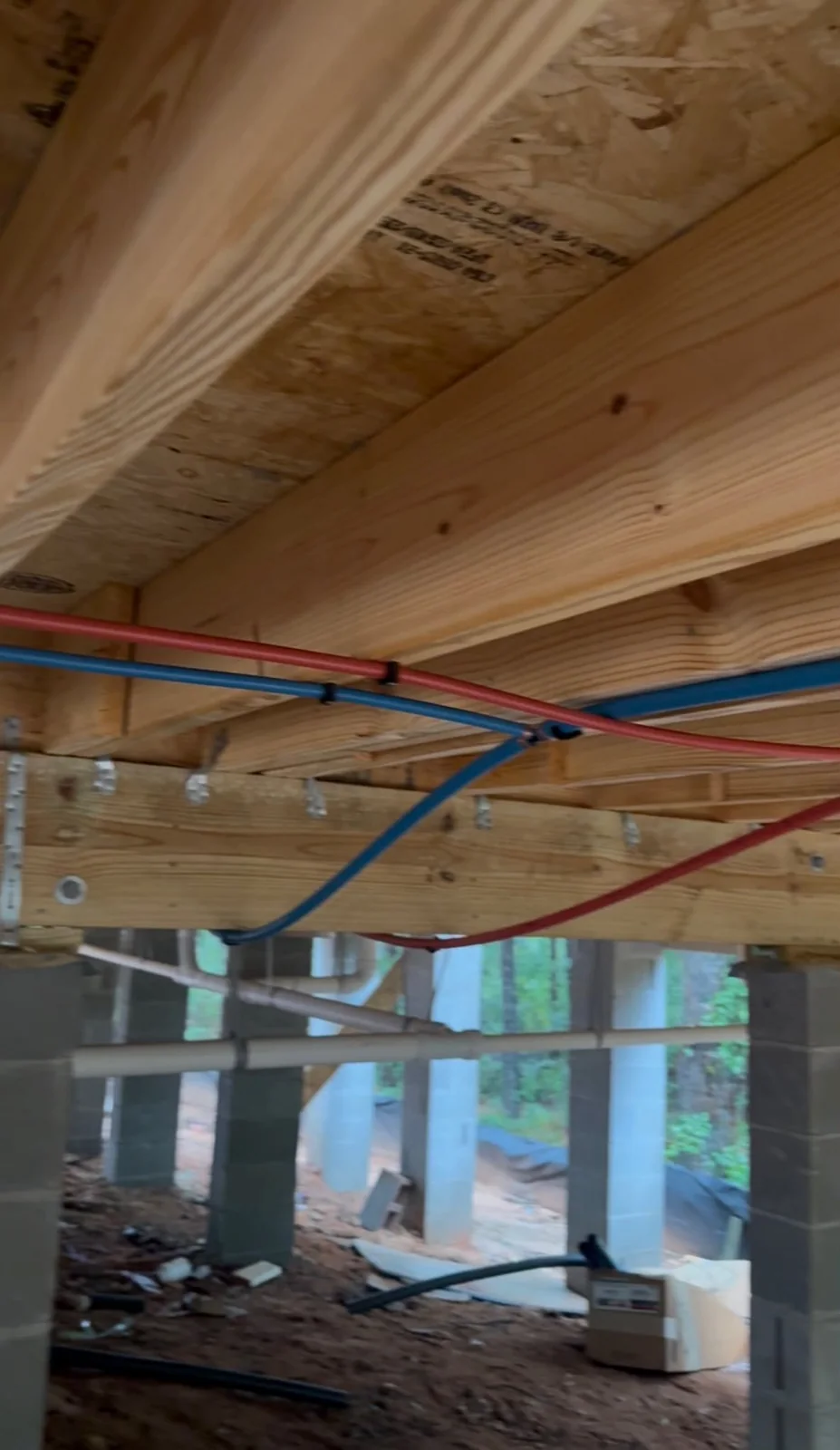
PEX runs in long continuous lengths with far fewer joints, tolerates a freeze better, and goes in faster and through tighter spaces. Copper is rigid, proven, and the right answer in some runs and for some owners. The choice gets explained in plain terms so you can pick, not handed down as the only option.
What the job actually looks like
Access holes get cut where the lines run, the new system goes in, it gets pressure tested before anything closes up, and then the drywall gets patched. It is a disruptive job for a few days and a quiet system for decades. Anyone who tells you it happens with no holes in the wall is not telling you the truth.
The old unit tells you how to set the new one
Before anything comes out, the existing setup gets looked at for what failed and why. Undersized supply, a missing shutoff, a connection that was never right, a drain that was always marginal. Installing a new fixture onto the same bad conditions just resets the clock on the same complaint.
Shutoffs and access get fixed while the wall is open
The cheapest time to put a proper shutoff on a fixture is while the work is already happening. Houses where every repair means closing the main are houses where small problems turn into emergencies, and that is usually a twenty dollar part somebody skipped years ago.
It gets tested before anybody leaves
Pressure held, connections dry, drain flowing, no movement in the fixture. A leak that shows up two hours after the truck pulls away was a leak when the truck was still there, and testing is how you catch it then instead of later.
How to tell what you’re dealing with
Knowing which of these sounds like your house makes the first call a lot shorter.
If you hear banging in the walls
Hammering when a valve closes is pressure with nowhere to go. A regulator or an arrestor fixes it.
If the pressure dropped everywhere at once
That is upstream of the fixtures: the meter, the main shutoff, a pressure regulator, or the well pump and tank.
If the water smells or stains
Iron, sulfur and sediment are water quality problems. A test tells you which filtration is worth having.
If pinhole leaks keep showing up
Copper or galvanized that is failing from the inside does not get better one patch at a time. That is the repipe conversation.
How a call goes, turn by turn.
From the phone ringing to the truck pulling away, there are four stops and none of them involve a sales pitch.
Start
Paul picks up
You call (251) 421-0367 and the man who’ll do the work answers. No phone tree, no dispatcher, no waiting for a callback from somebody else.
Then
He’s on the way
You get a real time instead of a four-hour window, and he keeps it. One review has him there at 9 for a 7 a.m. call; another, on the way within twenty minutes.
Then
Finds the real cause
A camera, a meter or a pressure test before any number gets said out loud. A guess is how a repair comes back.
Arrive
Fixed and tested
Tested before the truck leaves. You hear what was done and what to keep an eye on, in plain words.
“Paul is honest and treats everyone like family.”
Other jobs Paul does
More systems work
Things worth doing yourself
None of this needs a plumber. It’s the short list that prevents the calls nobody wants to make.
- Drains Hot water and a drain screen beat chemical cleaner. Caustic drain products damage older pipe and make a cable job messier later.
- Hose bibs Disconnect hoses before the first hard freeze. A connected hose holds water in the bib and that is what splits it.
- Toilets A drop of food coloring in the tank will tell you in ten minutes whether the flapper leaks.
- Grinder pumps Test that the alarm actually sounds. An alarm nobody has checked is not an alarm.
- Water pressure Put a gauge on a hose bib once. Anything over about eighty psi is quietly shortening the life of every valve in the house.
Straight answers
Still not sure? Ask Paul directly.
How do I know the house needs repiping?
Pinhole leaks that keep coming back, rusty water and pressure falling across the house all point that way. Looking at the pipe settles it before anybody quotes the job.
What does a plumbing inspection cover?
Supply and drain lines, the water heater, fixtures, shutoffs and pressure, with a plain account of what is fine and what is not.
Do you work on older homes?
Yes. A lot of the housing stock here is older, and cast iron, galvanized and polybutylene all behave differently. That is diagnosis work, which is the part that matters.
Who actually shows up?
Paul Evans. Every time. LT Drain is a one-truck, one-man operation on purpose, so the person who answers your call is the person who does the work.
Are you licensed?
Licensed Master Plumber MP4379, bonded and insured. The number is printed on this site because you should be able to check it with the Alabama plumbing board.
How fast can you get here?
Call and you get a real answer, not a window that spans the afternoon. Paul runs his own schedule, so he can tell you where he is and when he can be at your door. His reviews include a 7 a.m. call answered with a 9 a.m. arrival, and a call answered with someone on the way within twenty minutes.
Let’s talk solutions.
Tell Paul what it’s doing. He’ll tell you what it needs and when he can be there.
Call (251) 421-0367 Or send a messageMaster Plumber MP4379 · BBB A+ accredited · licensed, bonded and insured