
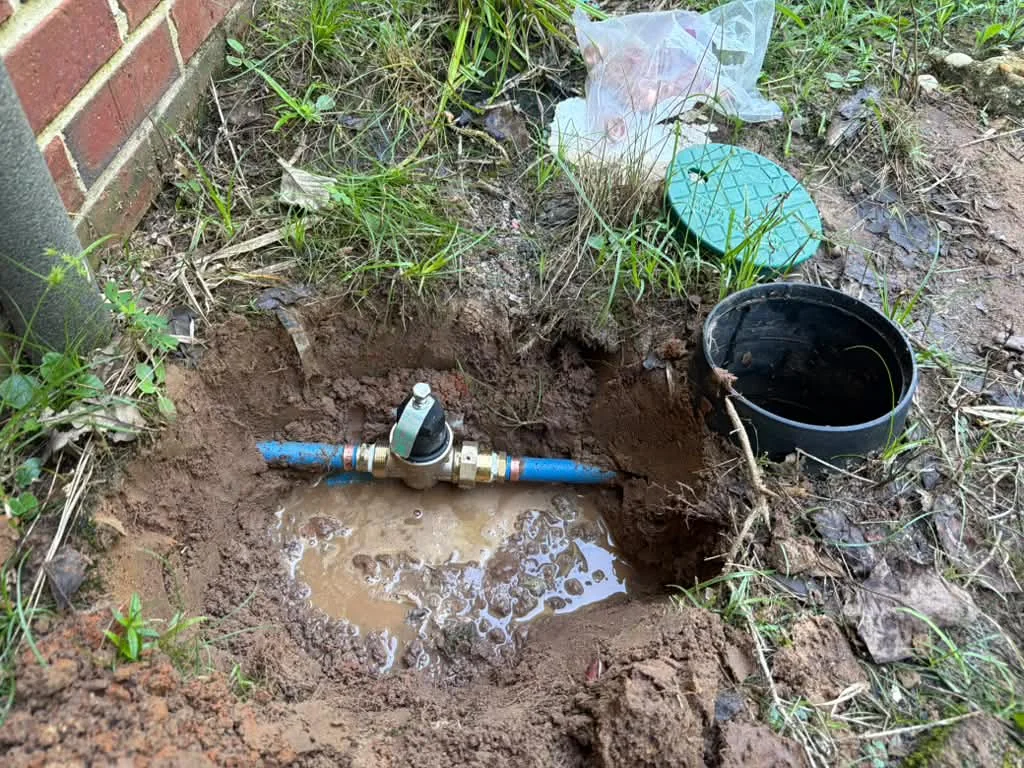
The water service line is the pipe that runs underground from your water meter to the house. It carries every drop you use, and it lives its whole life buried in the yard where nobody looks at it. When it leaks, the water goes into the ground instead of a room, so there is no ceiling stain or wet carpet to warn you. The clues are out in the yard and on your bill, and they are easy to miss for a long time.
On most city water systems, the utility is responsible for the meter and everything on the street side of it, and the homeowner owns the line from the meter to the house. That means a leak on your side is yours to fix. If you are not sure where that line is drawn on your system, your water utility can tell you, and it is worth knowing before you call anybody.
The signs of a service line leak
- A wet or soggy spot in the yard. Especially one that stays wet when it has not rained, somewhere between the meter and the house.
- A strip of greener grass. A line of grass greener than the rest, running toward the house, can mark the route of a leaking pipe.
- Water pooling at the meter box. Some water in a meter box is normal after rain. Standing water on a dry week is not.
- Lower water pressure in the whole house. Every fixture weaker than it used to be, all at once.
- A bill that jumped for no reason. The house uses water the same way, and the bill went up.
- A hissing sound at the meter. Sometimes you can hear the water moving when nothing is on.
Some of those can come from other things. Low pressure across the house can be a failing pressure regulator, and a wet spot can be an irrigation line or a drain. A high bill can be a running toilet. That is why the first step is a simple test that settles whether water is leaving the system, and which side of the house it is leaving from.
The meter test, with the house shut off
Turn off every fixture in the house and make sure nothing that uses water is running: no washer, no dishwasher, no ice maker, no irrigation. Go to the meter and look at the leak indicator, the small triangle, star or wheel on the meter face that turns when water moves. If it is spinning, water is going somewhere.
Then find the main shutoff where the line enters the house and close it. Go back and look at the meter again. If the indicator is still moving with the house shut off, the leak is between the meter and the house. That is the service line. If the indicator stops, the leak is inside the house, which is a different job, and could be anything from a running toilet to a leak under the slab.
Old house shutoffs seize. If yours will not turn, do not force it with a wrench until it breaks. Tell me on the phone, because replacing a seized shutoff is often part of a service line job anyway.
What these lines are made of
The material in the ground tells me a lot about why it failed and what is likely to happen next. Older houses in Mobile County can still have galvanized steel lines, which rust from the inside and outside and eventually leak or close up. Copper lasts well in a lot of soils but can corrode in others. Some houses built in a certain era got gray polybutylene, which has a well-earned reputation for failing at the fittings. Newer houses have plastic lines, usually blue or black polyethylene or PVC, which do not rust but can crack at a fitting or get cut by digging.
If I dig up a leak on a galvanized or polybutylene line, the rest of the line is the same age and the same material, and I tell you that plainly. A spot repair on a line like that can buy time, but it rarely ends the problem.
Finding the leak
On a short line with a soggy spot, the leak is often right under the wettest ground. On a longer line, or a leak that has not surfaced yet, it takes more work. I trace the route of the line from the meter to the house, listen along it, and look for where the ground is soft or where the water is coming up. Knowing where the line actually runs matters, because it does not always go in a straight line from the meter to the house. The leak detection page covers the process in more detail.
Plastic lines are harder to trace than metal ones, because there is nothing for a metal locator to pick up, and a lot of them went in with no record of the route. Where the line comes out of the meter box and where it enters the house give me two fixed points. Old trench lines in the grass, a path that avoids a tree, or the way the ground settles after rain usually fill in the rest. When I lay a new plastic line, I make sure the next person who has to find it does not have the same problem.
Fixing it: dig and repair, or a new line
Dig and repair. If the line is in decent shape and the leak is in one spot, I dig down to it, cut out the bad section or the failed fitting, and splice in new pipe. The hole gets backfilled, and the yard gets put back as close to how it was as I can. On a plastic line with one cracked fitting, this is usually the right answer, and it is a much smaller job than replacing the run.
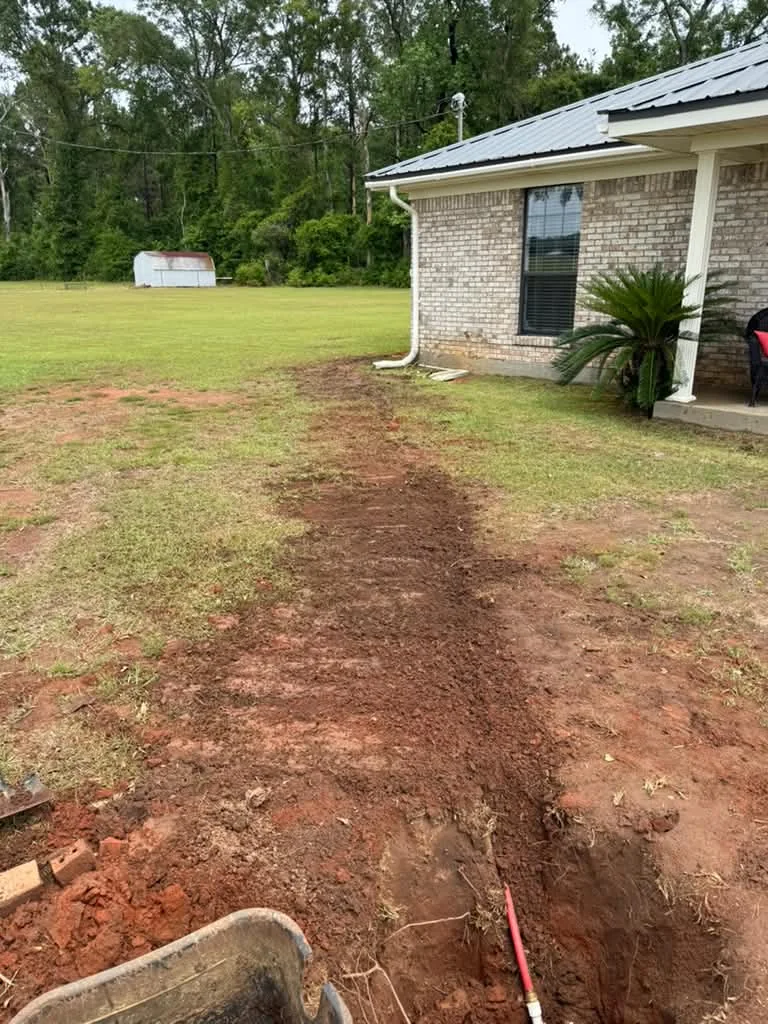
A new line. If the line is galvanized, polybutylene, or has leaked before, I usually recommend replacing the run from the meter to the house. That means digging a trench along the route and laying new pipe, the way the service line photo on this page shows it done. Either way, you end up with a new line in a modern material and new connections at both ends, which usually includes a new shutoff at the house. The leak repair page goes through the smaller repairs, and I can talk you through what a full replacement would look like in your yard.
A spot repair on a line that is failing everywhere just picks which leak you fix this time.
What goes into a new line
Before any digging starts, the other buried utilities on the property get located and marked, because a service line route often crosses gas, power, cable and irrigation. The new line goes in deep enough to stay protected, on a bed that will not grind on it, and where it has to pass under a driveway or a walk I look for the least destructive way through. The connection at the meter gets done right, the connection at the house gets a shutoff you can actually turn, and the whole run gets pressure tested before the trench is closed.
A lot of the trouble I find on old service lines comes from how they were put in, more than from the pipe. A line laid on rocks, buried too shallow under a parking spot, or joined with fittings that did not belong together will fail early no matter what it is made of. The new line is my name in the ground for a long time, so it goes in the way I would want it in my own yard.
The pressure regulator
Many houses on city water have a pressure regulator where the service line enters, a bell-shaped valve that keeps the house from seeing the full pressure in the street. When one fails, pressure can drop across the whole house, which feels a lot like a leaking line, or it can climb too high, which is hard on every valve, hose and water heater in the house. If the meter test shows no leak and the pressure still feels wrong, the regulator is one of the first things I check. A gauge on a hose bib tells me what the house is actually seeing.
You see the pipe when it comes up, and you make the call. I will tell you what I would do in your yard and why.
When you have no water
Sometimes a service line does not slowly leak. It breaks, and the house loses water or nearly so. That is a different kind of morning. Linda Solomon called me in that spot: “I called at 0700 am because I did not have any water that morning… he calmed me down and assured me he would be here at 0900 and he was here.” When you have no water, I want to know right away, because it is one of the calls that needs to move fast. That is an emergency plumbing call.
If a line breaks and water is pouring out of the ground, close the main shutoff at the house to stop the water from going inside, then find the curb valve at the meter if you can. Many meters have a valve on the street side that the utility controls, and some have one on the house side you can turn. If you cannot shut it off, call the water utility as well, because they can close the water at the meter.
Wells and long runs
Out in Washington County, a lot of houses are on wells, so there is no meter. The line runs from the well and the pressure tank to the house, and it can be long. A leak in that line shows up differently. Instead of a bill, the clue is the well pump. If the pump kicks on when nothing in the house is running, water is going somewhere, and the line between the well and the house is a common place for it to go.
To test it, shut everything off in the house and listen for the pump or watch the pressure gauge on the tank. If the pressure drops and the pump comes on with nothing running, there is a leak. Then close the valve where the line enters the house. If the pressure still drops, the leak is out in the yard. If it holds, the leak is inside.
Why it should not wait
A slow service line leak is easy to ignore, because it is outside and nothing in the house gets wet. But the water bill keeps paying for it, the ground around the leak keeps getting softer, and a small leak in an old line has a way of turning into a big one. Water running under a driveway or a walk can wash out the base under the concrete. And a line that is leaking in one spot is often weak in others.
What to tell me when you call
Tell me what the meter did when you shut off the house, and whether you could close the main. Tell me where the ground is wet and roughly how far the meter is from the house. If you know what the line is made of, tell me that too. If you are on a well, tell me whether the pump is cycling with everything off. Some of the service line and trench work I have done is on the gallery page, and you can reach me from the contact page.
Questions people ask about this
Who is responsible for the water line from the meter to my house?
On most city systems, the homeowner owns the line from the meter to the house and the utility owns the meter and the street side. Your water utility can confirm where the line is drawn on your system.
How do I know if my service line is leaking?
Shut off everything in the house and watch the leak indicator on the meter. If it moves, close the main shutoff at the house. If it keeps moving with the house shut off, the leak is between the meter and the house.
Can a service line be repaired instead of replaced?
Yes, when the line is in good shape and the leak is in one spot. On galvanized or polybutylene lines, or lines that have leaked before, replacing the run usually makes more sense than chasing the next leak.
Will you have to tear up my whole yard?
A spot repair means one hole over the leak. A full replacement means a trench along the route, or less digging where a new line can be pulled through. Either way, the yard gets put back as close to how it was as I can.
Why is my water pressure low all of a sudden?
A leak in the service line can cause a pressure drop across the whole house. So can a failing pressure regulator or, on a well, a problem with the pump or the tank. The meter test or a look at the tank gauge narrows it down.
Yard wet and the bill climbing?
Do the meter test with the house shutoff closed, then call and tell me what the dial did and where the ground is wet.