
Mobile, Mobile County
Getting the water heater you already own heating again
No hot water, a pilot that keeps going out, a tank that rumbles, or a relief valve dripping onto the closet floor. Most of those come down to one part. Paul Evans finds which part, fixes it, and tells you straight when the tank itself is the problem, before anything gets sold to you.
Why the first answer is usually a part
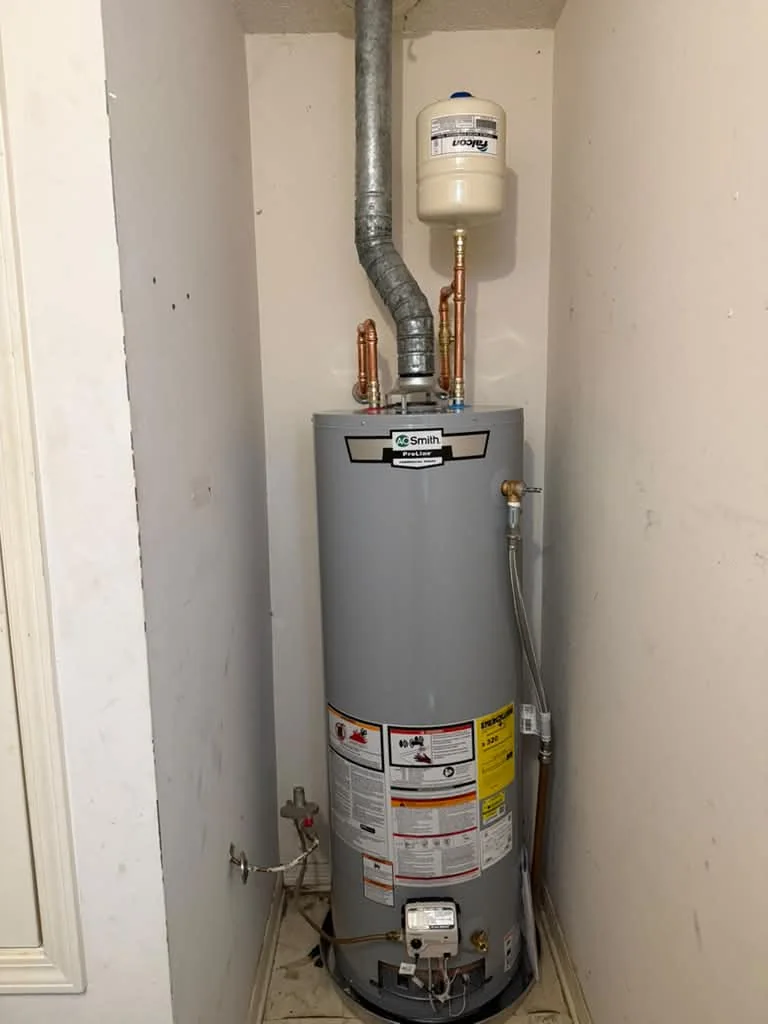
Paul fixes the small thing first when the small thing is the problem. On a gas tank, the small issue usually lives at the burner. A pilot that lights and then dies the moment you let go of the knob points at a worn thermocouple, the thin sensor that tells the gas control valve a flame is there. If the pilot holds but the burner never comes on, the gas control valve itself may be failing. Newer gas tanks seal the burner behind a screen at the bottom, and lint or dust can choke it. The water heater repair page covers the full list.
Electric tanks fail in their own way. There are two elements and two thermostats, and when one pair quits you get lukewarm water that runs out fast, or none at all. The red button on the upper thermostat is the high limit. If it tripped, Paul puts a meter on the elements and thermostats to learn why before he resets anything, because a reset without the reason just sends you back to a cold shower. Closer to the bay, salt air works on the fittings at the top of the tank, and green or white crust there is the first sign of a slow weep. New connectors and dielectric fittings handle that.
Brynn Burkmier’s water heater went out on a Friday, and her Google review ends with “they showed up in less than 30 mins!!” That was one Friday; Paul tells you on the phone when he can actually be there. When water comes from the tank body, or the bottom has rusted through, no part will save it, and Paul says so; the water heater replacement page covers that job. Water on the floor beside a dry tank may be coming from somewhere else, which is what leak detection is for. Photos of finished jobs sit in the gallery, everything else Paul does in town is on the Mobile page, and you can reach him at (251) 421-0367 or through the contact form.
Parts that give out before the tank does
These five come up again and again on water heater calls, and none of them needs a new tank to put right.
Thermocouple
On a standing pilot gas tank, the thermocouple sits in the pilot flame and holds the gas valve open for as long as it stays hot. When it wears, the pilot lights fine and goes out as soon as you release the knob. Paul swaps it, makes sure the pilot flame lands where it should, and watches a full burn before he leaves.
Gas control valve
The valve on the front of a gas tank carries the thermostat dial and meters gas to the pilot and the burner. If the pilot stays lit but the burner never fires, or the water runs far hotter or colder than the dial says, the valve is the suspect. It gets replaced as one unit, and every gas joint is tested afterward.
Elements
An electric tank heats with two elements, one high and one low. A burned out lower element leaves you a short shower, and a dead upper one usually means no hot water at all. A meter reading shows which one failed without any guessing. The tank is drained below that element, the new one goes in with a fresh gasket, and the tank is full again before power returns.
Thermostats and high limit
Each element has its own thermostat, and the upper one carries the high limit, the red reset that cuts power when the water gets too hot. A thermostat stuck closed, or an element shorted to the tank, will trip it. Paul finds the cause first and replaces whichever piece caused it, so the reset actually holds after he is gone.
Relief valve
The temperature and pressure relief valve is the safety on every tank, and a slow drip from it is telling you something. Sometimes the valve is simply worn. Often the house has a check valve or a regulator on the main and nothing to absorb heated water, so pressure climbs until the valve lets go. Never cap its discharge line.
Match the symptom to the likely fix
Four things people describe on the phone, and where each one usually leads once Paul has the cover off.
If the pilot lights but goes out as soon as you let go of the knob
The thermocouple is the first suspect. It is a small part, and replacing it is usually a short visit with the tank left exactly where it stands.
If the tank pops, rumbles or crackles while it heats
Sediment has settled on the bottom and the burner or lower element is heating through it. Flushing helps a younger tank. On an older one, the drain valve may not seal again afterward.
If there is green or white crust on the pipes at the top of the tank
A connection is weeping slowly, and salt air close to the bay speeds that up. New connectors and dielectric fittings usually stop it, and the tank stays.
If water is coming from the tank body or the bottom seam
That is the lining, and nothing bolts on to stop it. Paul tells you so on the spot and talks through a replacement, rather than selling a repair that will not last.
How a repair visit runs
The order is the same whether the tank burns gas or runs on electricity, and the first step is always finding the fault.
- Hear it first On the phone you describe the fuel, the date on the label and what the tank is doing, and Paul tells you what he suspects.
- Make it safe Gas is turned to pilot or off, or the breaker is shut, before any cover comes off or a meter touches a wire.
- Test, then name the part Thermocouple, valve, elements and thermostats get checked in turn, and you hear which one failed and why before anything is replaced.
- Repair and refill The new part goes in, an electric tank is topped up and bled of air before power comes back, and gas joints get a leak test.
- Run a full cycle Paul waits for the water to come up to temperature, looks over the relief line and the fittings up top, and tells you what the tank has left in it.
What people ask about a tank that quit
Still not sure? Ask Paul directly.
Should I relight the pilot myself?
If the instructions on the tank label are clear and you do not smell gas, relighting it is fine. If it lights and goes out again as soon as you release the knob, stop there, because that is usually the thermocouple. If you smell gas at any point, leave the closet alone and get outside.
My electric tank has no hot water. Can I just press the reset?
You can, with the breaker off first, and if the water heats again you have learned something. The high limit trips for a reason, though, often a sticking thermostat or a failing element. If it trips a second time, leave it off and call Paul, because something in that tank is overheating.
Is a dripping relief valve dangerous?
A dripping relief valve is letting water out for a reason, so never plug it or cap the line. The question is why. A worn valve gets replaced. Pressure that climbs every time the tank heats usually means the house needs an expansion tank, and Paul checks the water pressure to tell which one you have.
Will flushing fix the rumbling?
On a tank with a few good years left, flushing the sediment out of the bottom often quiets it down. On an old tank that has never been flushed, opening the drain valve can stir loose more than it clears, and the valve may not seal again. Paul looks at the age before recommending either.
How do I know it is time to stop repairing it?
When the tank leaks from its own body, when the bottom has rusted, or when parts keep failing on a tank already past its first decade. At that point another repair goes into a tank that is finishing anyway, and Paul tells you so rather than doing the work and leaving you to find out.
Does Paul work on both gas and electric tanks?
Yes. Gas tanks bring the pilot, thermocouple, burner and gas control valve. Electric tanks bring the elements, thermostats and the high limit. Paul is a licensed Master Plumber, MP4379, and he is the one who answers the phone, diagnoses the tank and makes the repair, every time you call.
Back to a hot shower
Read Paul the label on the tank, say whether it burns gas or runs on electricity, and describe what it is doing. He will tell you what he suspects before he drives out.
Call Paul (251) 421-0367 Or send a message