
Semmes, Mobile County
Drain cleaning for a Semmes house that has quit draining
Whether it is one sink that holds water or a tub filling up every time the washer empties, Paul Evans answers the phone and comes out himself. He finds where the line is actually closed and clears it with the right cable. Then he tells you in plain words what was in there and whether it is likely to come back.
Where the stoppage actually is
The first question on any drain call is how much of the house is involved. A bathroom sink that drains slow while everything else runs fine has a problem a few feet from the drain opening, usually hair and soap caught in the trap. When the toilet gurgles as the shower runs, or the tub is the fixture filling up, the line that carries everything out of the house is closing. Paul asks which fixtures are acting up before he drives over from Wilmer, next door to Semmes, so the right machine is already on the truck. More on how he works around town is on the Semmes page.
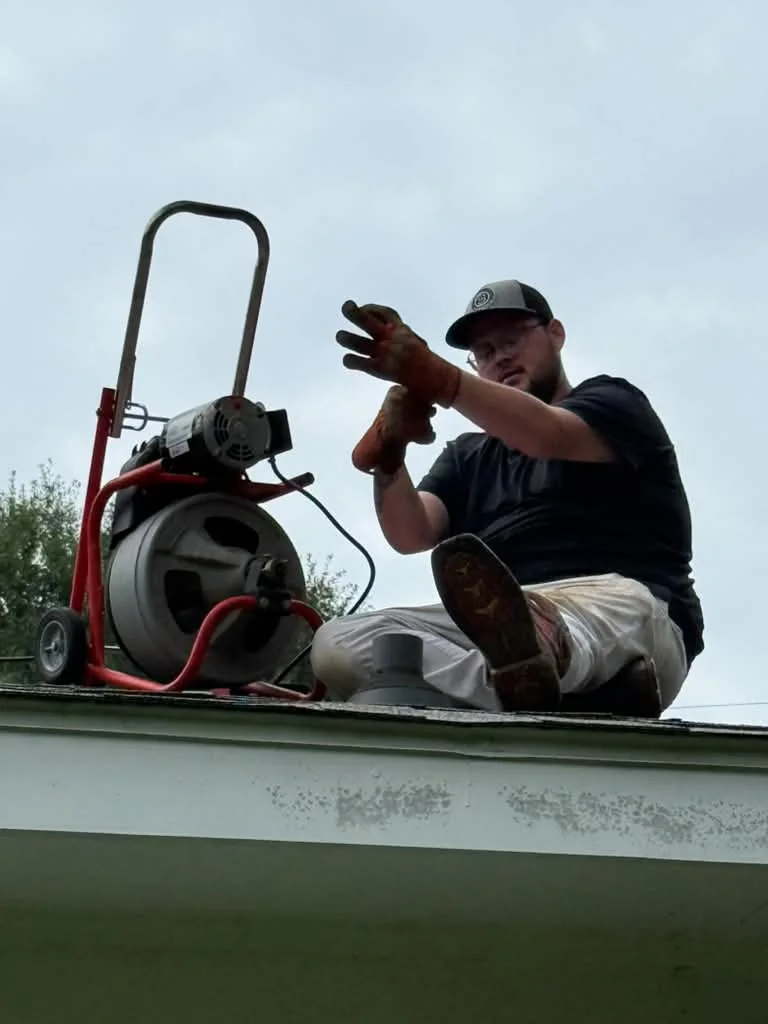
A house built on a slab may have no cleanout outside, or one that got buried under a flower bed years ago. When that is the case, the cleanest way into the main is often from above. The vent stack on the roof drops straight into the drain system, so Paul carries a drum machine up the ladder and feeds the cable down the vent rather than pulling a toilet or cutting into a line. The mess stays outside your house and the cable gets a straight run down. Shingles get stepped on with care, and the vent cap goes back the way it came off. Pictures of jobs like that are in the gallery.
Kitchen lines are their own story. Grease goes down warm and sets up on the pipe wall as it cools, a little more every week, until one evening the sink stands full. A simple clog should get a simple fix. Becca McDonald put it this way in her Google review: “We had a simple clogged kitchen sink issue and an outrageous quote from a large company. Paul came in and found a quicker solution to the problem.” The longer version of drain cleaning has its own page. On a house with a grinder pump, a backup with the alarm lit belongs on the grinder pump repair page instead. Call (251) 421-0367 or send Paul the details.
What Paul looks at on a slow drain
Five things decide how a drain call goes. Knowing them ahead of time makes the first conversation shorter and the visit simpler.
Which fixture went first
The order things quit in tells a story. A shower that slowed for weeks before the toilet joined it points at a line closing gradually, usually buildup. Everything stopping on the same afternoon points at something that lodged, like a wipe or a toy, or a section of pipe that gave way. Tell Paul the sequence and he will usually know which end to start from.
Grease and hot water
Pouring hot water after grease only carries it a few feet further down the pipe before it sets again. Over time the kitchen line narrows to a slot. A plain cable opens a path through that, and a cutting head on the cable scrapes more of the wall clean. Paul will tell you whether a line that far gone should be cleared again or looked at with a camera.
Wipes and what flushes
The package may say flushable, but a wipe does not break apart in a drain the way toilet paper does. Wipes snag on any rough spot in the pipe, catch the next one coming down, and build into a mat that a small cable can slip right past. In a main line they are among the most common things Paul pulls out on the cable head.
Find your cleanout
Many houses have a capped pipe somewhere outside where the drain leaves the building, often near the foundation. Finding it before you need it saves digging and a trip to the roof, and it gives Paul the straightest path into the main. If you have looked and cannot find one, say so on the phone. That tells him to bring the ladder.
When a camera earns its keep
Once the line is flowing, a camera run shows what the cable was fighting: roots at a joint, a belly where the pipe sagged, or a section that has cracked. Sandy loam over clay shifts as it wets and dries, and buried pipe shifts with it. If a line cleared easily and stays clear, a camera may not be worth running at all.
Reading the symptoms before you call
Each of these points somewhere different. Tell Paul which one fits and he shows up with the right tool.
If the kitchen sink holds water but the bathrooms drain fine
then the stoppage is almost certainly in the kitchen branch, and it is usually grease. That line gets cleared from under the sink or the nearest access, and the rest of the house never gets touched.
If the toilet bubbles or rises when the washing machine empties into the drain
then the main is partly closed and the rush of water from the washer has nowhere to go but back up the lowest openings. That is a main line call, and a sink plunger will not touch it.
If the drains only act up after a hard rain
then groundwater may be getting into the line through a cracked joint or a loose cleanout cap. Running a camera after the cable is the way to find exactly where it gets in.
If you cleared it yourself and it was back within a week
then the snake opened a hole through the blockage without removing it. A larger head, or a look with the camera, shows what is still hanging on in there.
More Semmes work, one page each
Before Paul pulls up
A few minutes of this makes the visit cleaner and keeps a backup from spreading while you wait.
- Stop running water Every flush, load of laundry or dishwasher cycle sends more water toward a line that cannot take it. Hold off until the stoppage is cleared, and let everyone else in the house know too.
- Clear the way Move whatever is stored under the sink, beside the toilet or in front of the washer so Paul can reach the access without unpacking a closet first.
- Note the sequence Jot down which fixture slowed first and which ones are acting up now. Half a minute of notes saves a lot of guessing at the door.
- Look for a cleanout Walk the outside of the house and look for a capped pipe sticking up near the foundation. Leave the cap on and just tell Paul where it is.
- Say what went down If someone already poured drain opener in there, or something solid went down a toilet, mention it on the phone. It changes how the line gets opened and keeps everyone clear of a chemical splash.
Questions worth asking first
Still not sure? Ask Paul directly.
Can you clear a drain if my house has no outside cleanout?
Yes. The roof vent usually gives a straight path into the main, and Paul cables through it from up top. Pulling a toilet is the other route in. He will tell you which one fits your house before he starts, and why that one makes more sense for the line you have.
How do I know if it is the main line or just one drain?
Count the fixtures involved. One slow sink with everything else fine is that sink’s own line. Two or more fixtures acting up together, especially the toilet and the tub, means the main. A closed main shows itself first at the lowest opening in the house, so keep an eye on the tub and shower.
Will drain cleaning fix a line that keeps clogging?
It will get water moving again. Whether it stays moving depends on why the line closed in the first place. Grease and hair usually stay gone after a thorough cleaning. A clog that returns within months suggests roots, a sag or a broken section, and that is when Paul suggests a camera before cabling it again.
Is it safe to pour drain opener down before you get here?
Paul would rather you didn’t. Caustic openers rarely reach a deep stoppage, and when they fail they leave a pipe full of chemical sitting right where the cable has to go. They are hard on older pipe and on rubber seals as well. If some is already down there, mention it when you call.
What will Paul tell me once the drain is clear?
What it was, where it was and whether he expects it back. If he pulled grease, roots or a wipe out on the cable head, he shows you. If he thinks a camera is worth running, he explains why, and if he thinks it isn’t, you hear that as well. You decide what happens next.
Is the person on the phone the one who comes out?
Yes. LT Drain is Paul Evans, a single truck run by one plumber, so the voice that answers is the man who climbs your roof or kneels at your cleanout. He holds Master Plumber license MP4379, carries an A+ with the BBB and is licensed, bonded and insured.
Water standing still?
Call and tell Paul which drains are slow and which one went first. He will tell you what he thinks is going on and when he can get to Semmes.
Call Paul (251) 421-0367 Send a message